





This post may contain affiliate links. Please read my disclosure policy.
In This Article Show
Highlights after fifty are not about hiding your grey. Done gently, they are about working with it, letting the silver that grows in at the front become part of the brightness instead of a line you chase every three weeks. Highlights for women over 50 have changed a lot in the last few years. The new techniques place fine ribbons of light exactly where your own colour is changing, so the grow out stays soft, the appointments get further apart and your hair keeps a natural depth that one flat dye shade can never give. This guide walks through eleven gentle techniques, from painted balayage to a simple clear gloss, with the exact words to say to your stylist for every single one.

Every photo in this guide shows a real woman over fifty wearing one of these techniques, at the salon or out in the world. Some are almost fully silver with lowlights woven back in for depth. Some are brunettes keeping their warmth with golden ribbons. The point is choice. You do not have to cover every grey hair to look bright and polished, and you do not have to go fully silver before you are ready either. The techniques below sit everywhere along that road.
Read the list with your own pattern in mind. Where does your grey grow in first, at the front hairline, at the parting or scattered everywhere? How much time do you want between salon visits? The choosing notes after the quick picks match the technique to the pattern, and every idea ends with a Best for line and the exact sentence to say in the chair.
Short on time? Start with the quick picks, three small products that keep highlights bright between appointments, then jump to the technique that matches your grey pattern.
Quick Picks
- Best for brass control: Clairol Professional Shimmer Lights Purple Shampoo, a weekly violet wash that keeps silver and blonde ribbons clear and bright instead of yellow
- Best gloss refresh: L’Oreal Paris Le Color Gloss One Step Toning Gloss in Silver, an in shower gloss that brings back shine and cools the tone in about fifteen minutes, no mixing and no gloves
- Best for heat styling: CHI 44 Iron Guard Thermal Protection Spray, a light spray shield to use before the dryer or the tong, so fine highlighted lengths stay smooth instead of frazzled
How to Choose Your Highlight Technique
- Look at where your grey grows in first. Grey at the front hairline loves a money piece or face framing pieces. Grey scattered everywhere blends best with herringbone highlights or grey blending highlights.
- Decide how often you want to sit in the chair. Balayage and grey blending can stretch to three or four months between visits, while a partial highlight refreshes the crown every eight to ten weeks.
- Consider the hair you have now. Fine hair lifts fast and shows every line, so superfine babylights are the safest place to start. Thick hair can carry bolder ribbons with ease.
- Think about depth, not just lightness. Hair that has gone mostly white often looks better with lowlights woven back in, because contrast is what makes hair look thick and glossy in photographs.
- Budget for the gloss. A clear gloss between colour appointments is the cheapest service on this list, and the one that makes every technique above it look freshly done.
1. Balayage, the Softest Grow Out
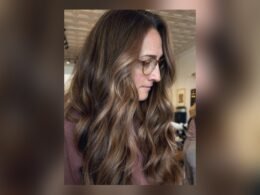
Balayage is painted on by hand rather than folded into foils, so the colour sits in soft ribbons that grow brighter toward the ends, just the way the sun would do it. The roots stay close to your natural shade, which is why this is the kindest technique for a woman who is done with the three week root chase. On this long wavy hair you can see white strands woven through the crown, with nobody able to point to where colour starts and natural grey stops. The grow out is a slow fade, not a line, and many women stretch their appointments to three or four months.
Best for: Women growing out old colour who want the longest gap between salon visits.
Ask your stylist for: A soft painted balayage, kept close to your natural shade at the roots and brighter through the ends, with a cool ash toner.
2. Babylights, the Barely There Brightening
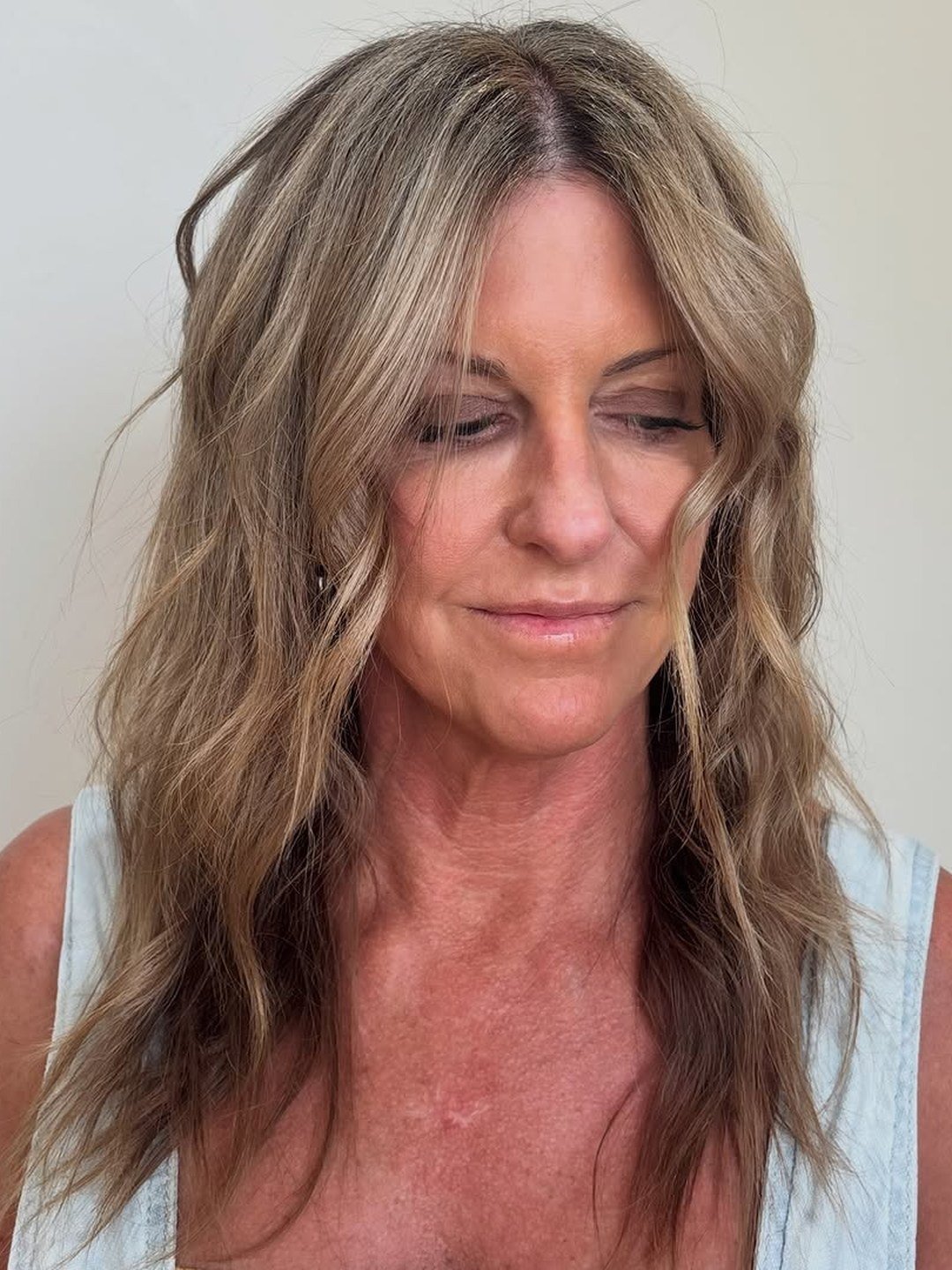
Babylights are highlights taken down to the finest possible weave, tiny sections lifted just a shade or two so the whole head seems to glow rather than stripe. They copy the way a child’s hair lightens around the face in summer, and on grown hair the effect reads as health, not colour. This long wavy style shows the idea at its best, light moving through every layer with no chunky ribbons anywhere. Because so little hair is lifted at each visit, babylights are also one of the gentlest options on this list for fine or fragile hair.
Best for: Fine hair, and anyone trying highlights for the first time who wants a soft, natural result.
Ask your stylist for: Superfine babylights woven through the top and the front, lifted only one shade for a sunlit finish.
3. Herringbone Highlights for Blending Grey
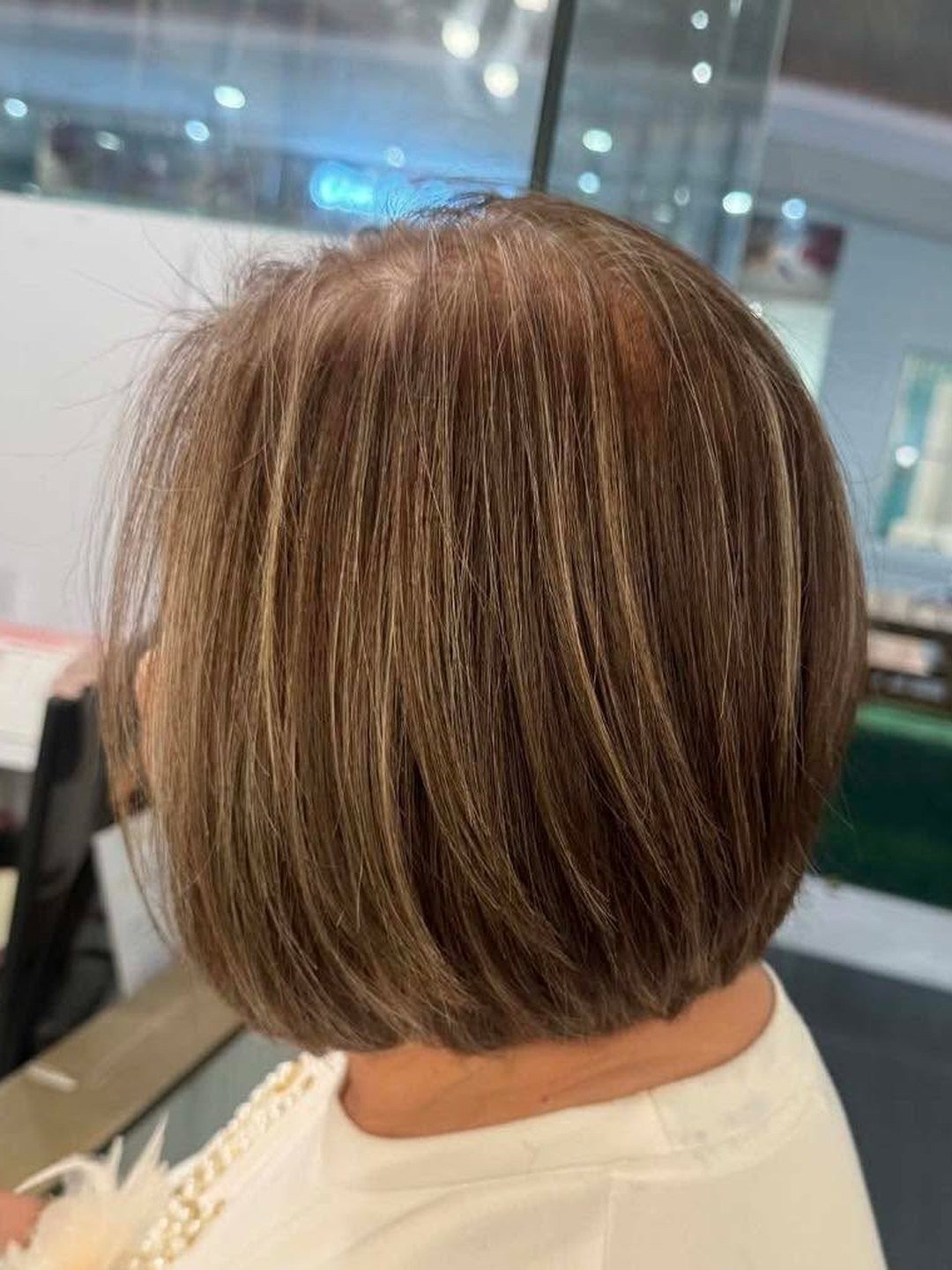
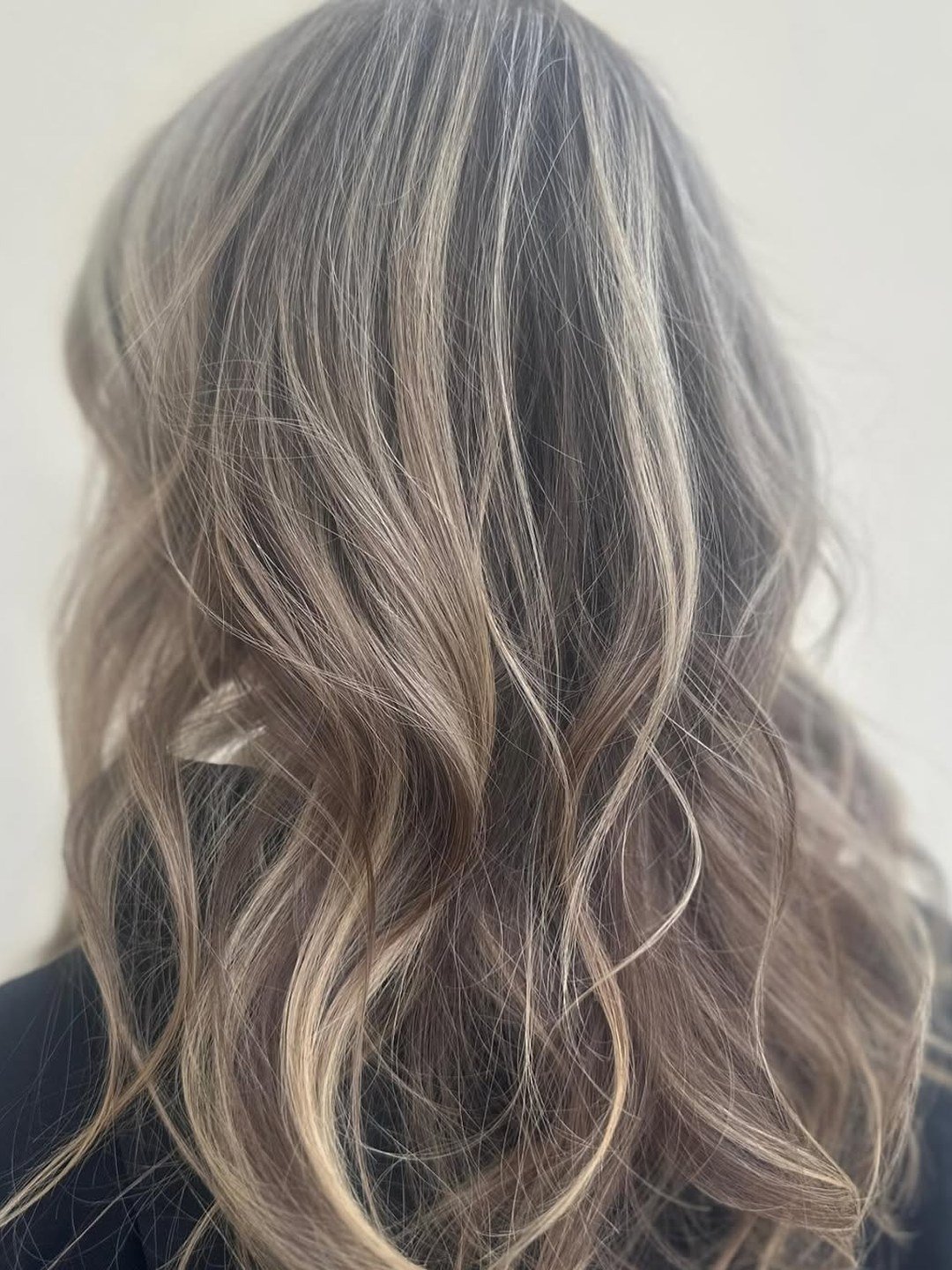
Herringbone highlights were designed for exactly one job, blending grey so well that nobody can find the join. Your stylist works in fine diagonal sections and weaves together two or three tones, a light one, a mid one and a deeper shade, copying the scattered pattern that natural grey actually grows in. Look at this bob from the back. White hairs are still there at the crown, but they read as part of the weave instead of a separate colour arriving uninvited. It is the technique stylists reach for when a client wants to stop solid dye without living through a hard grow out line.
Best for: Salt and pepper hair, and women retiring from solid dye who refuse a visible grow out line.
Ask your stylist for: Herringbone highlights in fine diagonal sections, mixing two or three tones that copy your natural grey pattern.
4. The Money Piece at the Front

The money piece is the boldest idea on this list and one of the cleverest. Two bright ribbons are lightened right at the front hairline, exactly where most women see their first and strongest greys, while the rest of the hair stays softer and deeper. The bright frame lifts the whole face the way good lighting does, and because it sits where your own silver wants to grow, the regrowth blends into the look instead of fighting it. These two platinum streaks over a wavy blonde base show the full drama of it. Upkeep is small too, because often only the front sections need refreshing.
Best for: Women whose grey arrives first and brightest at the front hairline.
Ask your stylist for: A bold money piece, two bright ribbons at the front hairline, blended back into a soft balayage through the lengths.
5. Lowlights for Depth and Dimension
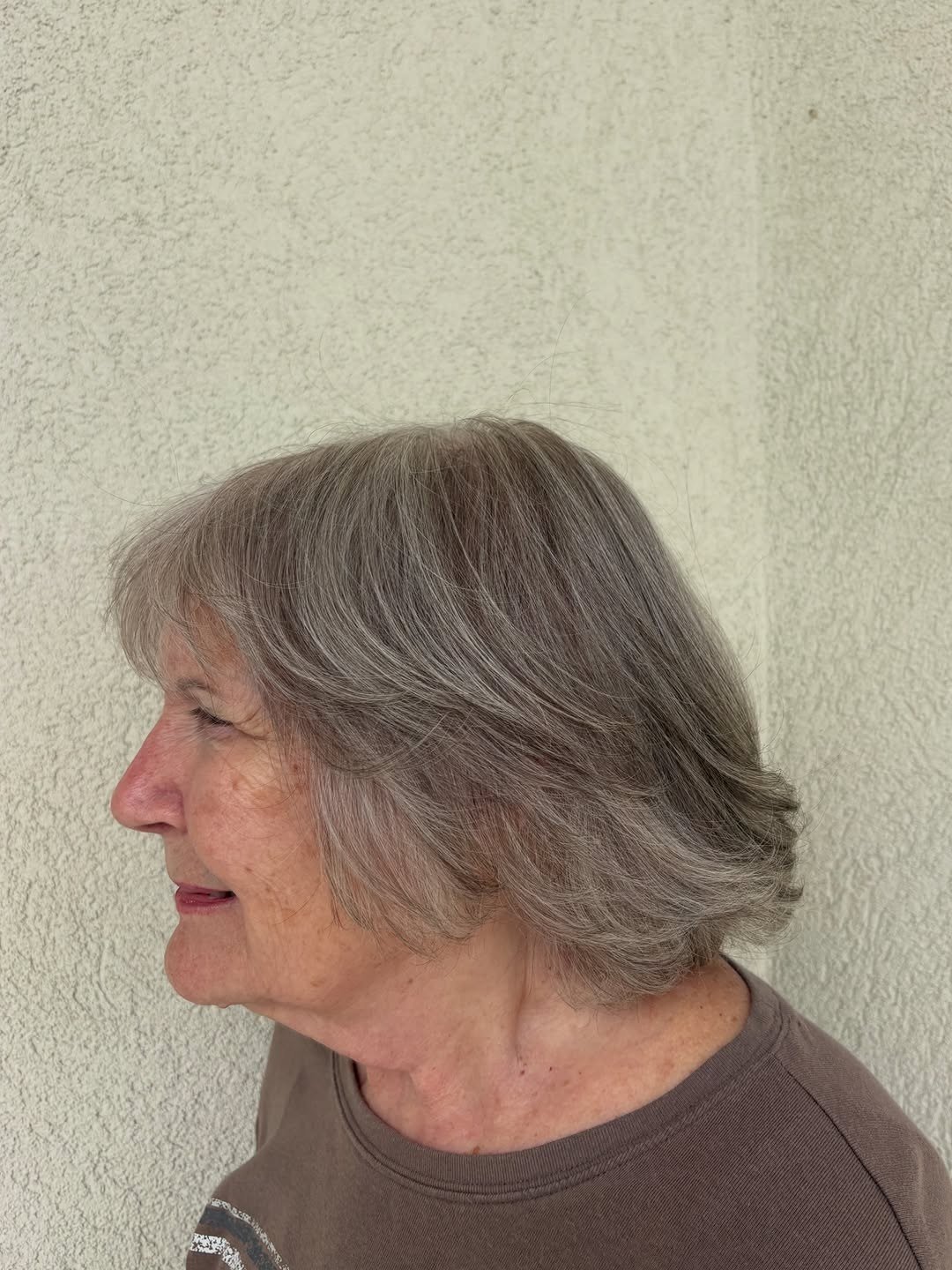
When hair turns mostly white it can start to look flat and washed out, especially in photographs, and the fix is often deeper colour rather than lighter. Lowlights weave strands a few shades deeper back through the hair, restoring the contrast that makes hair look thick and full. This gentle profile shows the result beautifully, soft grey depth running through the white so the whole style has shape and shadow again. The stylist behind this photo added grey lowlights through her client’s white hair for exactly this reason. Lowlights also grow out kindly, because there is no lightened root line to give them away.
Best for: Hair that has gone mostly white and looks flat, thin or washed out in photos.
Ask your stylist for: Grey lowlights a few shades deeper than your lightest hair, scattered through the top and sides for depth.
6. Face Framing Highlights
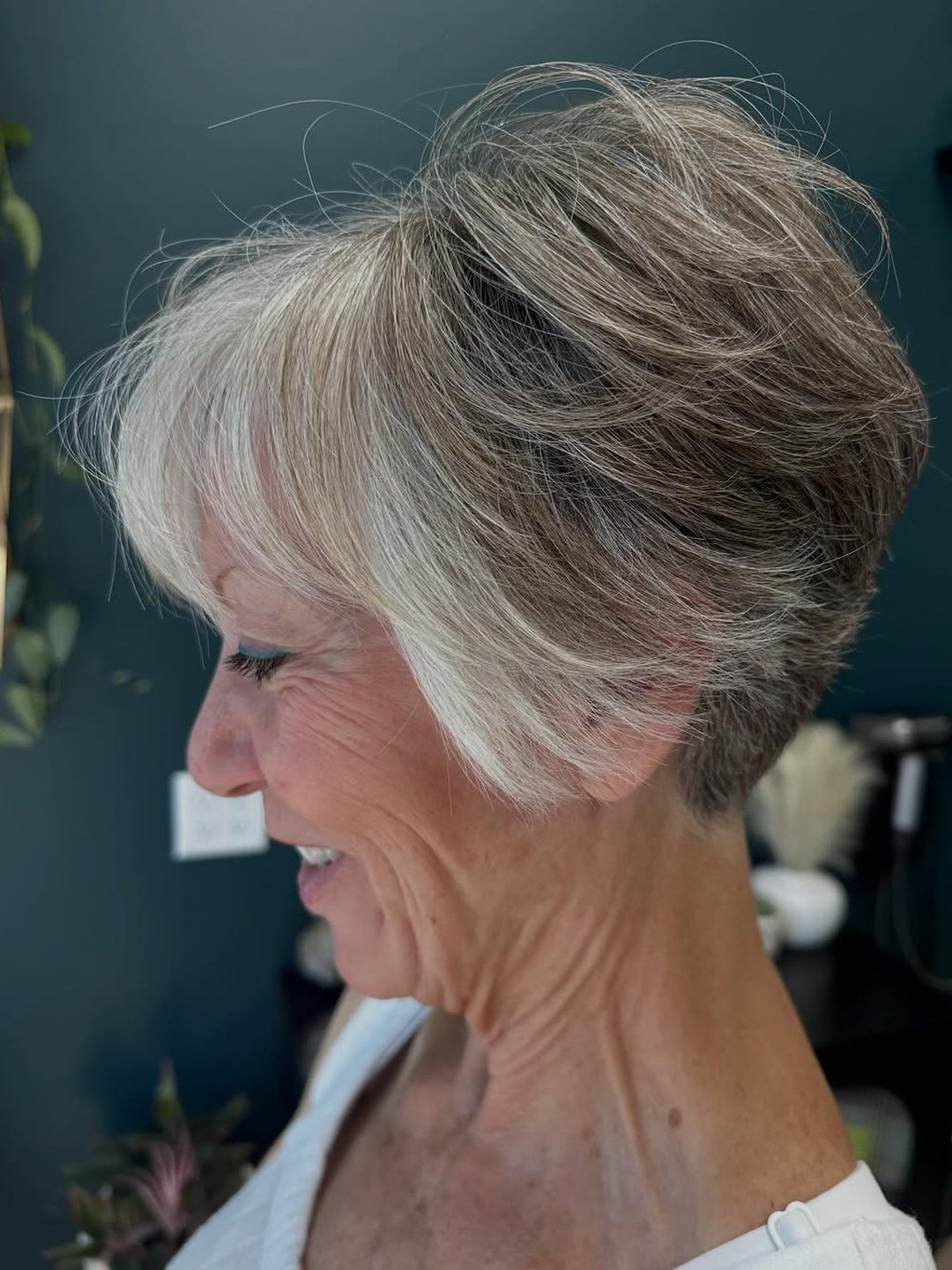
Face framing highlights concentrate the lightest colour where it does the most good, in the sections that fall around your face. On a short cut like this joyful pixie they are transformative. The front is kept bright and silvery while a little more depth stays at the back, so the eye goes straight to her smile. It is a small amount of colour with an outsized effect, and it suits women who find all over highlights too much time or too much money. Paired with a good short cut, this is five minute hair in the morning, wash, tousle and go.
Best for: Short cuts, and anyone who wants maximum brightness from a minimum of foils.
Ask your stylist for: Bright face framing pieces at the front kept lighter than the rest, with soft natural depth left at the back.
7. A Clear Gloss Over Highlights

A gloss is not a colour change, it is a finish. A clear or very lightly toned gloss is smoothed over your highlights at the basin, where it seals the surface of the hair, evens out the tone and adds the kind of shine that makes people ask if you have just had your colour done. This platinum bob is the picture of it, bright, even and gleaming, on a woman who is growing her colour out with grace. A gloss takes about twenty minutes, costs far less than a full appointment and fades away gently with no line at all. Many stylists call it the secret appointment between appointments.
Best for: Dull or tired looking highlights that need shine and tone, not new colour.
Ask your stylist for: A clear gloss over your highlights, or a lightly toned one, left to sit for about twenty minutes at the basin.
8. Grey Blending Highlights

Grey blending highlights take the greys you already have and build the rest of your colour around them. Fine ribbons of silver, graphite and ash are woven through darker hair in the same places your own silver is growing, so the two become impossible to tell apart. The result, like this silver smoke blend, looks deliberate and striking rather than halfway. It is the technique for the woman who wants to travel toward her natural silver over a few appointments instead of one brave chop, and every visit can take the blend a little further until one day the foils are barely needed at all.
Best for: Dark or mid brown hair with strong silver coming through, partway through a transition.
Ask your stylist for: Fine grey blending highlights in silver and ash tones, placed where your own greys grow in strongest.
9. Warm Golden Highlights
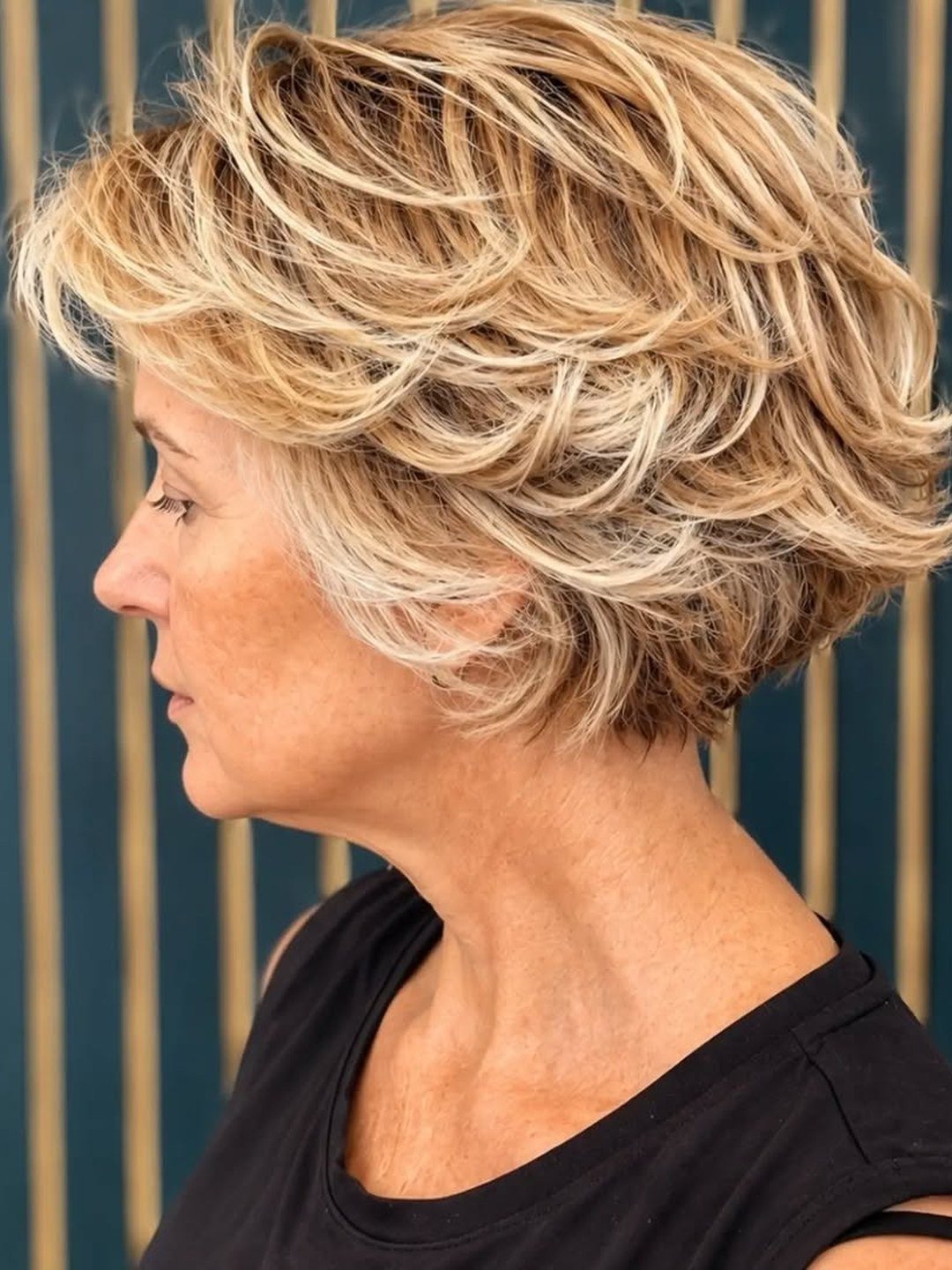
Cool tones get most of the attention after fifty, but warm golden highlights are the ones that bring colour back to the face. Golden ribbons through a short wavy crop like this one catch the light in every layer and make skin look warmer and healthier, the way late afternoon sun does. The mix of pale gold and deeper honey tones also keeps the style dimensional instead of flat. If silver and ash shades wash you out, warmth is your answer. Golden highlights sit happily on blonde and light brown bases, and even on a mostly grey base they read as sunshine rather than dye.
Best for: Warm skin tones, and women who find ash and silver shades draining.
Ask your stylist for: Warm golden highlights woven through the layers, brightest at the crown and around the front.
10. Ash Blonde Highlights
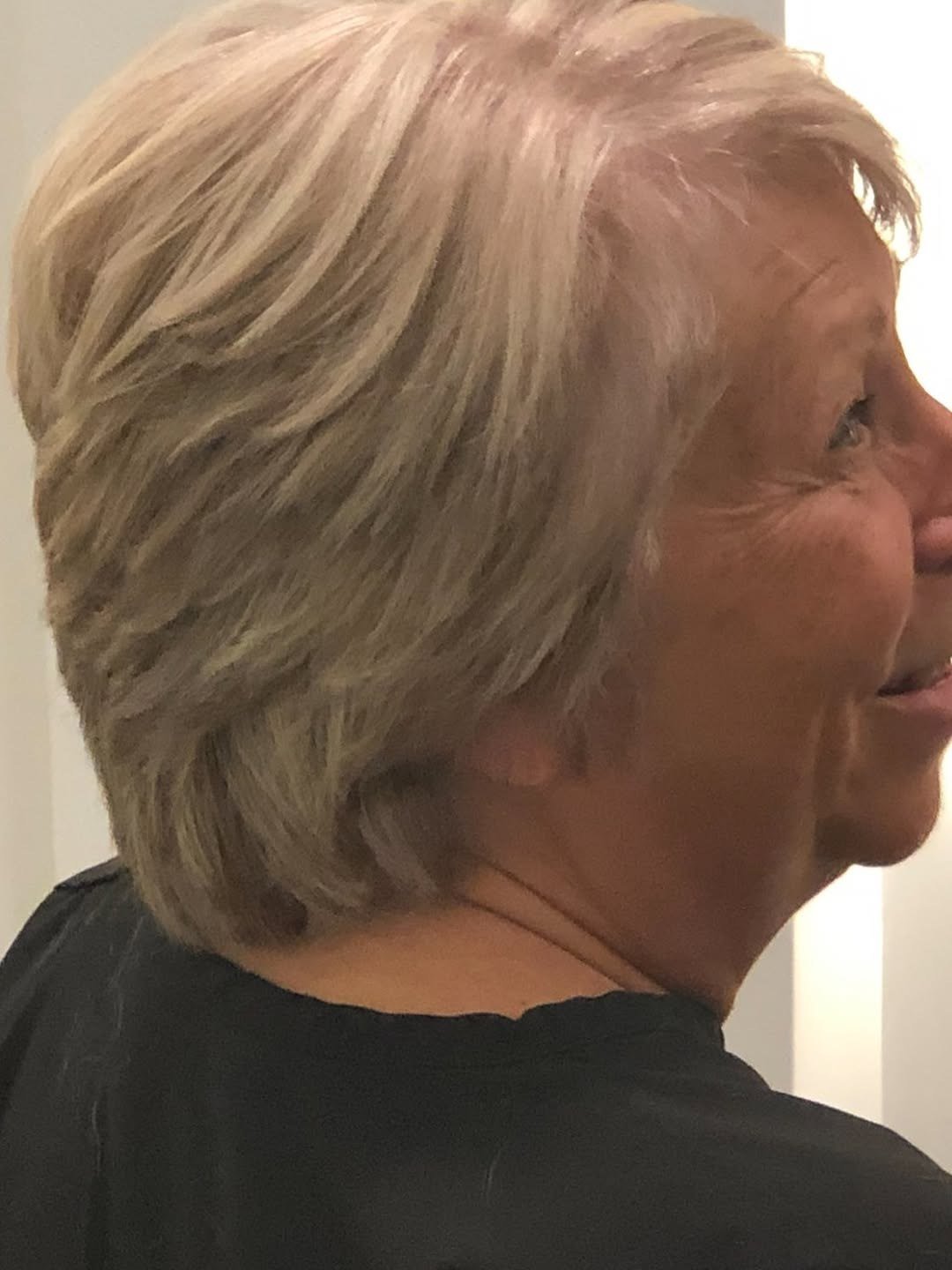
Ash blonde highlights are the cool toned counterpoint to the golden idea above. Ash shades cancel the yellow and brassy tones that creep into lightened hair, and they sit beautifully beside natural grey because they belong to the same cool family. This short layered style shows the blend at its most natural, soft ash blonde melting into silver with no hard edges anywhere. Ash does ask for a little upkeep at home. A purple shampoo once a week keeps the cool tone clean, and it is worth asking your stylist how long to leave it on, so the ash never tips over into dullness.
Best for: Cool skin tones, and highlighted hair that keeps turning yellow or brassy.
Ask your stylist for: Ash blonde highlights with a cool toner, plus advice on a purple shampoo routine for home.
11. Partial Highlights, the Gentle Refresh

A partial highlight places foils only where they show, through the crown, the parting and the front, and leaves the underneath hair in its natural depth. This layered bob shows why stylists love it. The top is bright and fresh, the underneath keeps the contrast that makes hair look full, and the appointment is shorter, gentler and kinder to the budget than a full head of foils. It is the perfect in between service, the refresh that carries you from one full highlight appointment to the next without the roots ever announcing themselves. For many women over fifty, the partial becomes the standing appointment and the full highlight becomes the twice a year treat.
Best for: Refreshing grown out highlights, and anyone who wants a shorter, gentler appointment.
Ask your stylist for: A partial highlight through the crown and parting only, blended softly down into the lengths.
Frequently Asked Questions
Which highlights blend grey the best?
Herringbone highlights and grey blending highlights were both designed for this exact job. Both weave fine ribbons in more than one tone, copying the scattered pattern that grey actually grows in, so new silver melts into the colour instead of sitting on top of it as a line. Babylights come a close third, because their superfine weave softens any contrast at the root. If your grey is concentrated at the front, a money piece or face framing pieces will blend it best of all.
Do highlights damage hair after 50?
Any lightening lifts the surface of the hair, and hair after fifty is often finer and drier than it used to be, so the technique matters more than the product name. Painted balayage and superfine babylights touch far less hair than a full head of traditional foils, and a gloss adds shine with no lift at all. Ask your stylist for a conditioning treatment on the same visit, keep heat styling gentle at home, and your highlights can leave your hair looking healthier than the flat dye they replaced.
How often do highlights need refreshing?
It depends on the technique you choose. Balayage and grey blending highlights are the most forgiving and can stretch to three or four months. A partial highlight usually refreshes the crown every eight to ten weeks, a money piece may need only its front ribbons redone, and a gloss fades gently over four to six weeks with no line at all. This is the real gift of the newer techniques. The calendar loosens, and your hair still looks deliberate the whole way through.
Can I get highlights if my hair is fully grey?
Highlights need some pigmented hair around them to read as highlights, so on hair that is fully white the smarter tools are lowlights and gloss. Lowlights weave depth back in so white hair stops looking flat, and a clear gloss gives it the shine that makes silver look expensive. If your hair is still a mix of grey and your old colour, you are in the sweet spot, and the blending techniques in this guide will work beautifully for you.
What is the difference between balayage and babylights?
Balayage is painted onto the surface of the hair in ribbons, kept soft at the roots and brighter toward the ends, so it grows out as a gentle fade. Babylights are superfine foils or weaves worked through the whole head and lifted only a shade or two, so the whole colour glows evenly. Choose balayage for the longest, easiest grow out. Choose babylights for the most natural all over brightening, especially on fine hair.
How do I stop my highlights turning yellow?
Three habits keep blonde and silver ribbons clean. First, a purple shampoo once a week, left on for two to three minutes, cancels yellow before it settles. Second, a gloss every month or two reseals the tone and restores shine. Third, always use a heat protectant before the dryer or the tong, because high heat dulls lightened hair faster than anything else. The three quick picks at the top of this guide are exactly the products that cover those three habits.
Final Thoughts on Highlights for Women Over 50
Highlights for women over 50 are at their best when they stop pretending the grey is not there. The eleven techniques in this guide all work with your changing colour in a different way, painting light around it, weaving through it, framing your face with it, or polishing it until it shines. None of them ask you to win a fight against your own hair, and every one of them can be softened or strengthened at the next visit as your pattern changes.
Take two photos from this list to your next appointment and use the stylist line under the idea you love. Agree on the tone, cool ash or warm gold, and on how many weeks you want between visits, before the first foil goes in. That one short conversation is the whole difference between highlights you tolerate and highlights you truly love.