






This post may contain affiliate links. Please read my disclosure policy.
In This Article Show
If your favorite trousers suddenly dig in, your blouses pull at the buttons and dresses that fitted last year feel like they belong to a stranger, you are not imagining it. After fifty, and especially around menopause, the body quietly rearranges itself. The clothes did not shrink. The map changed.
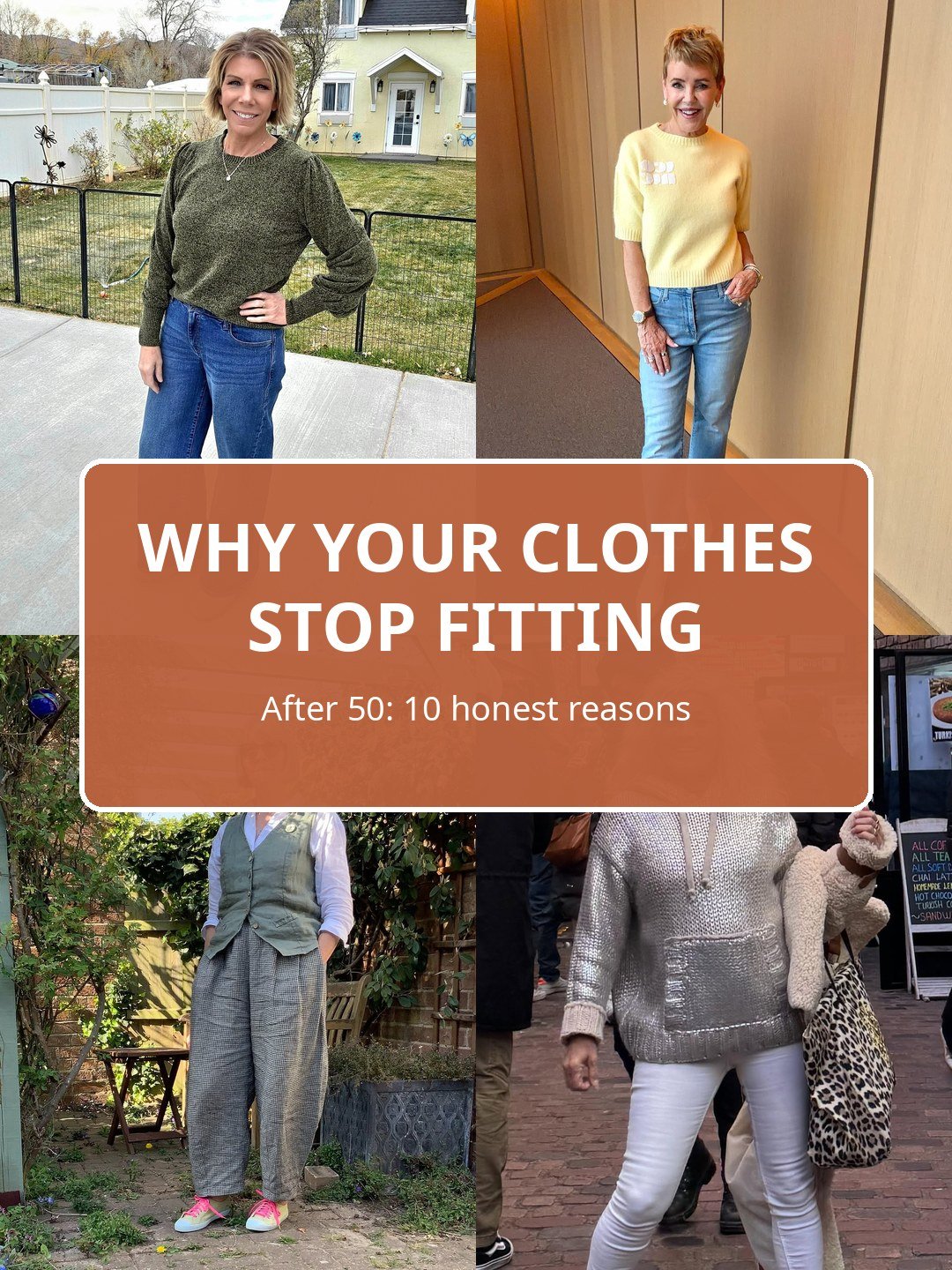
This guide walks through the ten most common changes, in plain language, with a real outfit photo for each one. None of this is about weight alone. Shoulders, posture, skin, feet and even height shift with age, and every shift changes how a garment hangs.
Under each reason you will find what to look for when you shop now, so the next thing you buy fits the body you actually have. Small buying changes beat a whole new wardrobe almost every time.
Short on time? Start with the quick picks, three forgiving basics that answer the most common complaints. Then read the reasons that sound like your mirror and shop with those notes open on your phone.
Quick Picks
- Best waistband fix: AVAMO wide leg pull on dress pants, a wide elastic waist that gives at lunch and still looks like trousers
- Best sleeve fix: Zeagoo three quarter sleeve tunic top, three quarter sleeves with room through the arm
- Best top fix: ELOQUII faux wrap top, a wrap front that adjusts to your bust instead of fighting it
1. Your Waist Moved Up and Filled Out

As estrogen falls, fat storage moves from the hips toward the middle, and the waist thickens even when the scales barely move. At the same time your natural waist often sits a little higher than it did. Old trousers cut for a lower, smaller waist now dig in exactly where you are softest, while a higher rise, like these wide leg jeans worn with a simple knit, meets your waist where it actually lives.
Look for: Higher rises, waistbands with elastic at the back, and two inches of ease you can pinch at the side seam.
2. Your Bust Sits Lower, So Tops Gape and Pull
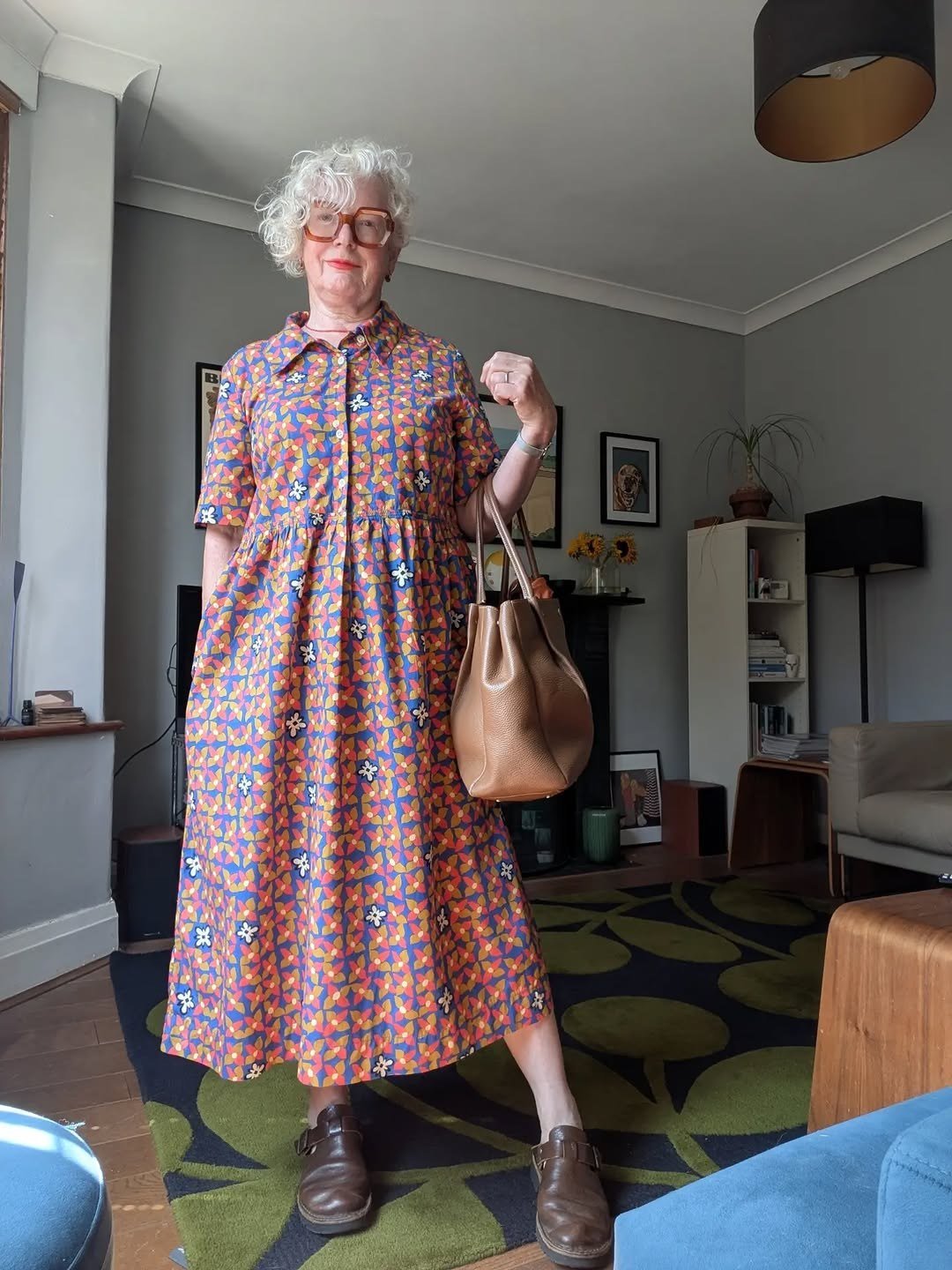
Breast tissue softens and sits lower with age, which moves the fullest point of the bust down an inch or two. Button fronts cut for a higher bust start to gape, and waist seams on dresses land above or below where they should. This floral shirt dress works because the bodice has room and the waist is gentle rather than fixed. Wrap fronts forgive the most, since you set the fit yourself, like this SHENHE wrap blouse.
Look for: Wrap and faux wrap fronts, stretch panels in bodices, and waist seams you can place with a belt of your own.
3. Your Shoulders Round a Little, So Necklines Slide

Years of desks, driving and looking down at phones round the shoulders forward a touch, and the back can curve slightly. Tops then pull across the back, sleeves twist, and wide necklines slip off one shoulder. A structured layer with a proper shoulder line, like this navy zip jacket, quietly holds everything in place and makes the whole outfit look straighter.
Look for: Set in sleeves rather than dropped shoulders, shoulder seams that end at your shoulder bone, and light structure in jackets.
4. Your Arms Changed, So Sleeves Feel Wrong First
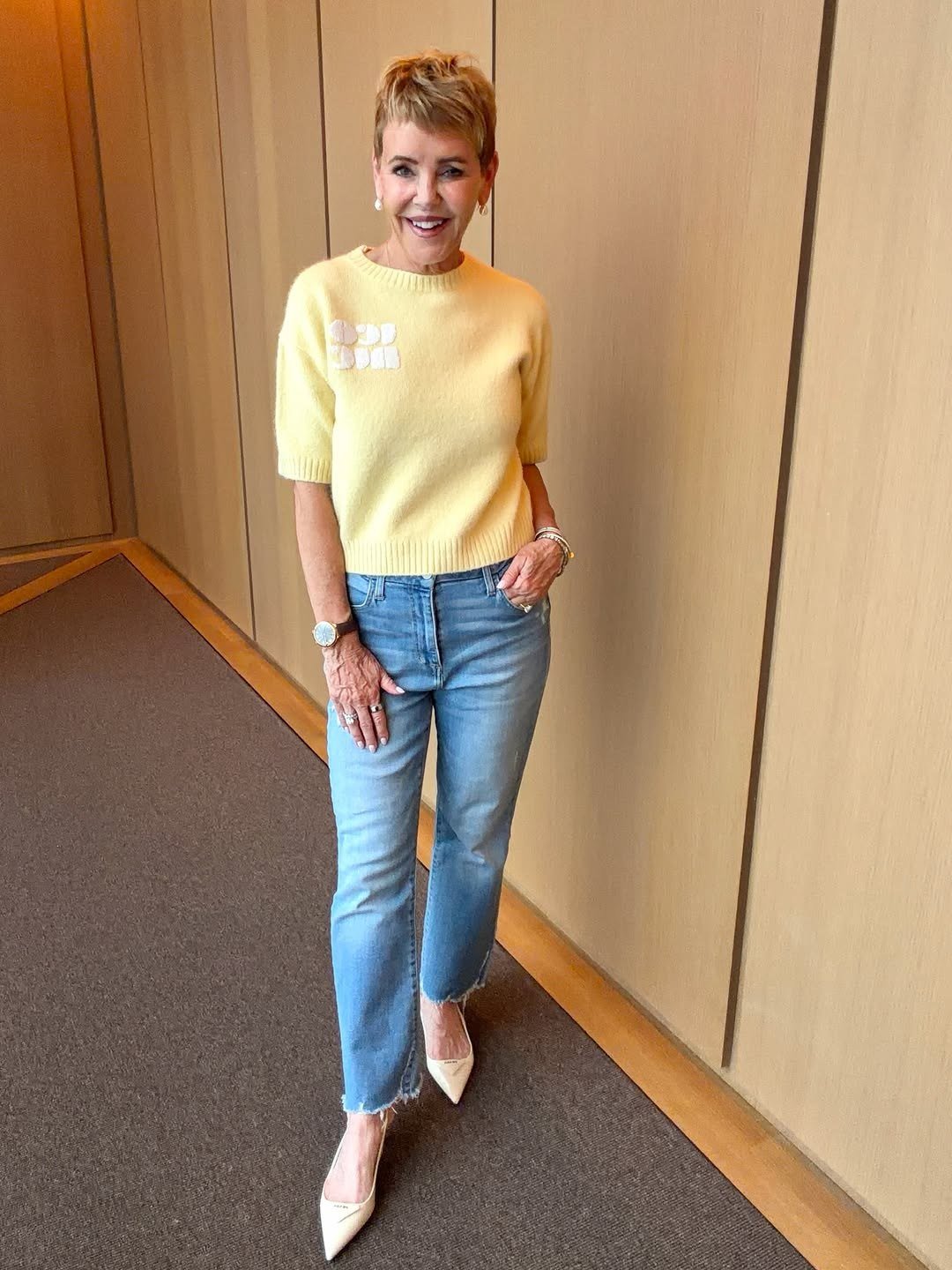
Upper arms soften and often grow a little, while the skin loses firmness. Sleeves cut slim for a thirty year old arm now bind, ride up or show every wobble, and many women size up a whole top just for the arms. This yellow knit gets it right, a sleeve that ends mid arm with breathing room. A tunic with a relaxed three quarter sleeve does the same job, like this LOMON three quarter sleeve tunic top.
Look for: Elbow length and three quarter sleeves, sleeve openings you can fit two fingers into, and knit fabrics with give.
5. Your Tummy Is Softer, So Waistbands Dig In

Even slim women often gain a softer layer over the lower tummy after menopause, and it swells and settles through the day. A rigid waistband that felt fine at breakfast can feel like a rope by dinner. Layers help because the eye reads the outfit, not the outline, as this cardigan and tee pairing shows. The real fix sits underneath, in waistbands built to move with you.
Look for: Flat front waistbands with elastic at the back, pull on styles that still look tailored, and mid rise cuts that sit below the softest point.
6. Your Hips and Thighs Keep Their Own Counsel

Some women lose hip curve as muscle fades, others keep it and add thigh softness. Either way, trousers cut on a straight block pull at the front or sag at the seat. Denim with a contoured, curved waistband follows the new shape instead of arguing with it, and a longer top layer, like this red sweater over a shirt, keeps proportions easy while you find your new fit.
Look for: Curved and contoured waistbands, one to two percent stretch in denim, and rises matched front to back.
7. You May Be a Touch Shorter, So Lengths Lie
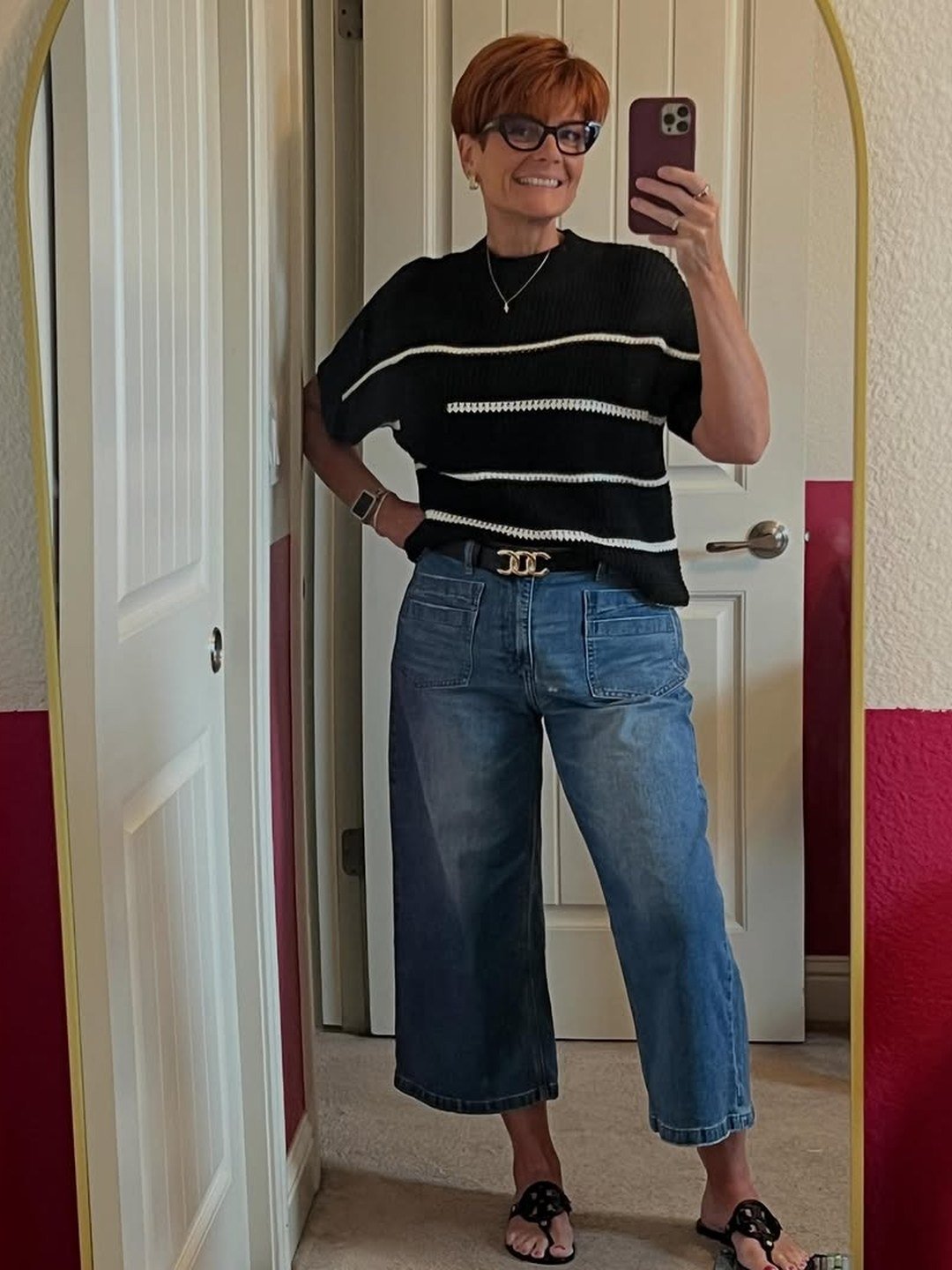
Most adults lose a little height from their forties onward as the spine settles, and posture changes add to the effect. Trousers that once skimmed the shoe now puddle, midi skirts land at a frumpy point and sleeves creep past the wrist. Cropped and ankle lengths, like these wide leg jeans, turn the problem into a style, and petite ranges quietly solve the rest.
Look for: Petite and short lengths even if you never shopped them before, ankle and cropped cuts, and hems taken up without guilt.
8. Fabrics That Forgave at 40 Shout at 55

Skin gets drier and more sensitive, temperature swings arrive with hot flushes, and stiff or shiny fabrics suddenly feel unbearable and look harsh. Natural fibers breathe through a flush and hang softly over a changed middle. This linen waistcoat and trouser set is the template, breathable, matte and loose where looseness feels good. Your comfort standards are not fussiness. They are information.
Look for: Cotton, linen and soft knits with a matte finish, a little stretch woven in, and linings that let skin breathe.
9. Your Feet Changed, and Shoes Rewrite Every Hem
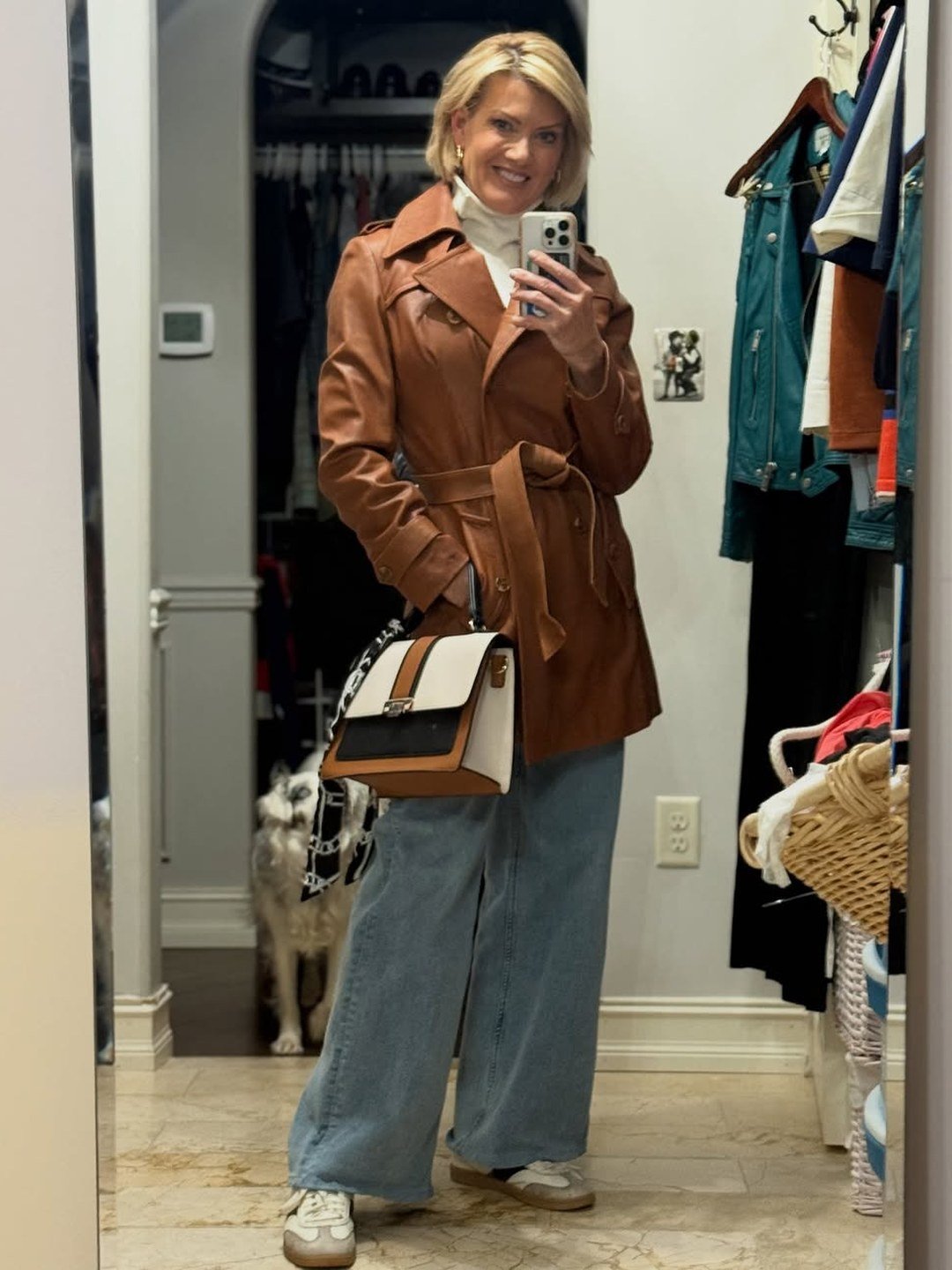
Feet spread, arches drop and heels get less friendly, so most women over fifty live in flatter, kinder shoes. That swaps the maths of every outfit. Trousers hemmed for heels drag, skirts sit at a different point and proportions shift. This trench and wide jeans pairing works because the length was chosen for the sneakers, not in spite of them.
Look for: Hem lengths chosen for the shoes you truly wear, ankle trousers that need no heel, and one good pair of smart flats or sneakers you love.
10. Sizes Were Never Standard, and Now It Shows
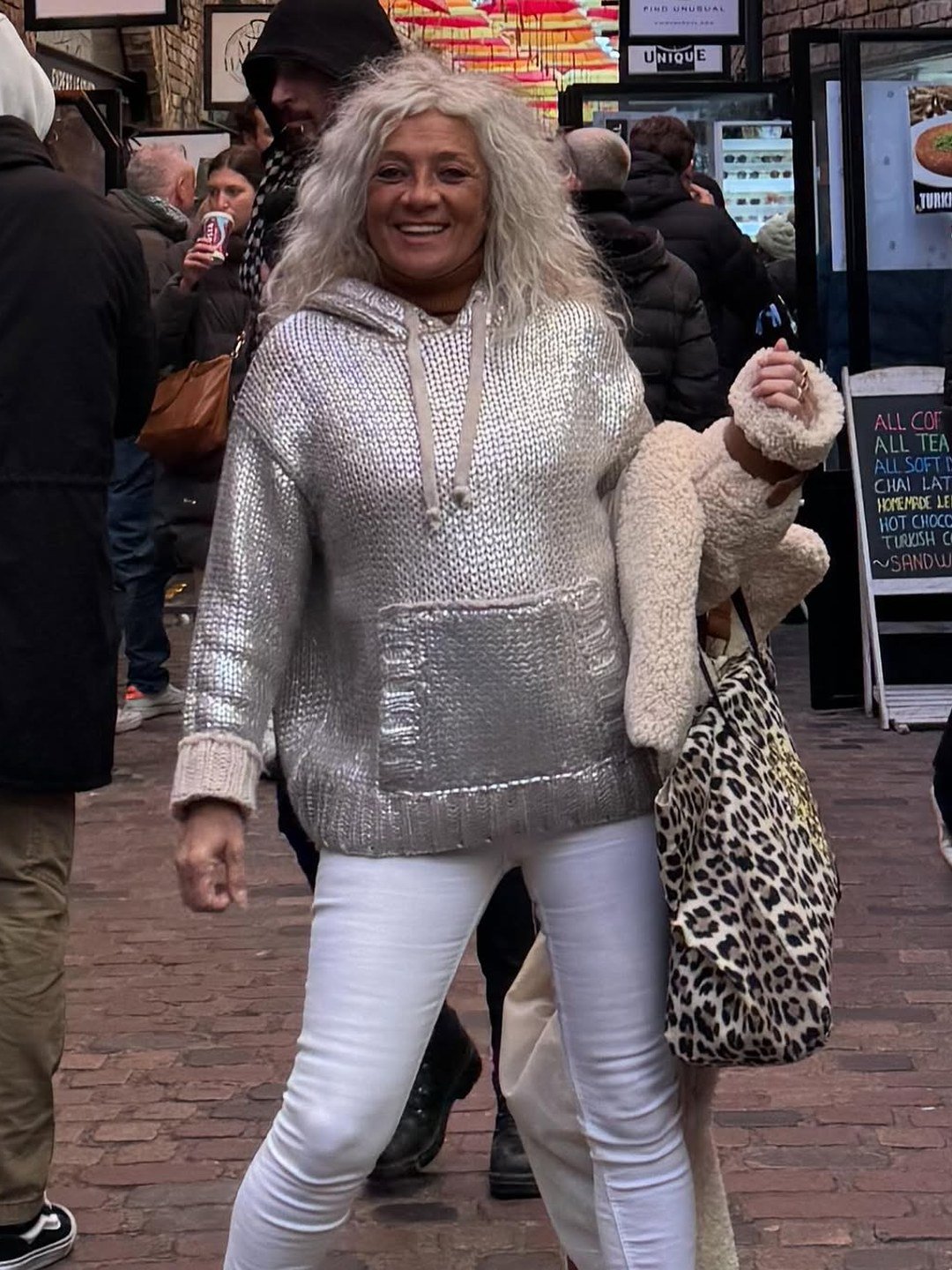
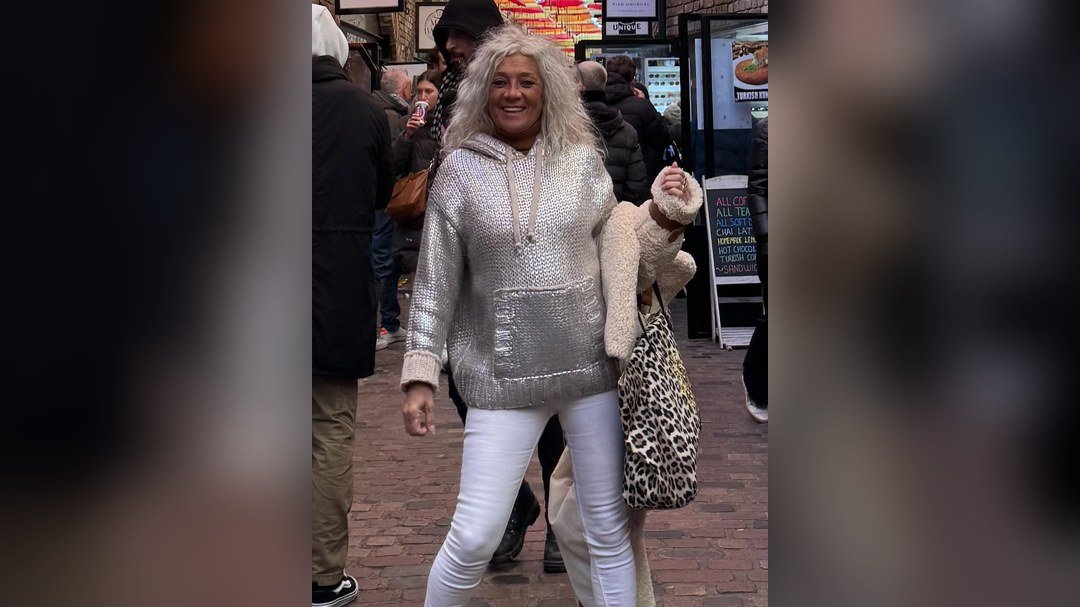
A size twelve has never meant the same thing in two shops, and brands quietly change their blocks over the years. Add your own changes and the label in your closet tells you almost nothing. The women who dress well at sixty, like this joyful silver hoodie and white jeans pairing, shop by fit points and measurements, not by the number they wore at forty. The goal is a body that feels at home in its clothes, not a label that matches your past.
Look for: A tape measure kept in your bag, fit points checked in the mirror (shoulder, bust, waist, hip), and zero loyalty to a number.
Five Checks Before You Buy Anything New
- Sit down, bend and reach in the changing room, because a fit that only works standing still is not a fit.
- Check the waistband at your real waist, higher and softer than the one your old clothes were cut for.
- Look at the sleeve opening and shoulder seam in the mirror, the two places age shows in a garment first.
- Choose the length for the flat, kind shoes you actually wear every day.
- Ignore the size label and judge the fit points, shoulder, bust, waist and hip, one by one.
Frequently Asked Questions
Why do my clothes suddenly not fit after 50 even though my weight is the same?
Because shape changes even when weight does not. Around menopause, fat storage moves toward the waist, muscle slowly fades from the hips and arms, the bust sits lower and posture shifts. The same weight arranged differently needs different cuts, rises and lengths, which is why the same size can feel wrong in every shop.
Is it normal for waistbands to feel tight by the end of the day?
Yes, very common. The midsection softens after menopause and the tummy naturally swells a little through the day with food, drink and digestion. Waistbands with elastic at the back or a full pull on design give through the day while still looking tailored in the morning.
Should I buy a bigger size when clothes stop fitting after 50?
Sometimes one size up in a tailored piece is right, but often the cut is the problem, not the size. A higher rise, a curved waistband or a wrap front in your usual size can fit better than a larger size in the old cut. Try both and judge by the fit points, not the label.
What is the most forgiving style to buy first?
A wrap or faux wrap top or dress, because you set the fit at the bust and waist yourself and it adjusts on days when your body feels different. After that, pull on trousers with a flat front and elastic back solve the most common daily complaint, the digging waistband.
Why do sleeves feel tight when the rest of the top fits?
Upper arms commonly soften and grow a little with age and muscle change, while many brands cut sleeves slim. Look for elbow length or three quarter sleeves with room, knit fabrics with stretch, and set in sleeves whose seams sit at your true shoulder.
How often should I remeasure myself after 50?
Once a year is a kind habit, and before any big purchase like a coat or an occasion dress. Measure bust, waist at its new natural point, hips and your inside leg, and keep the numbers in your phone. Shapes keep evolving through the fifties and sixties, and current numbers end most changing room frustration.
Final Thoughts on Why Clothes Stop Fitting Right After 50
Your body has not betrayed you. It has simply changed its arrangement, the way it has at every decade, and your wardrobe rules need one honest update. Higher rises, kinder waistbands, roomier sleeves, breathable fabrics and lengths chosen for real shoes answer nearly every complaint in this guide.
Start with the reason that sounded most like your mirror, fix that one thing first, and notice how much better the rest of your closet behaves. Dressing the body you have is not giving up. It is the whole secret of women who look comfortable and put together at every age.